
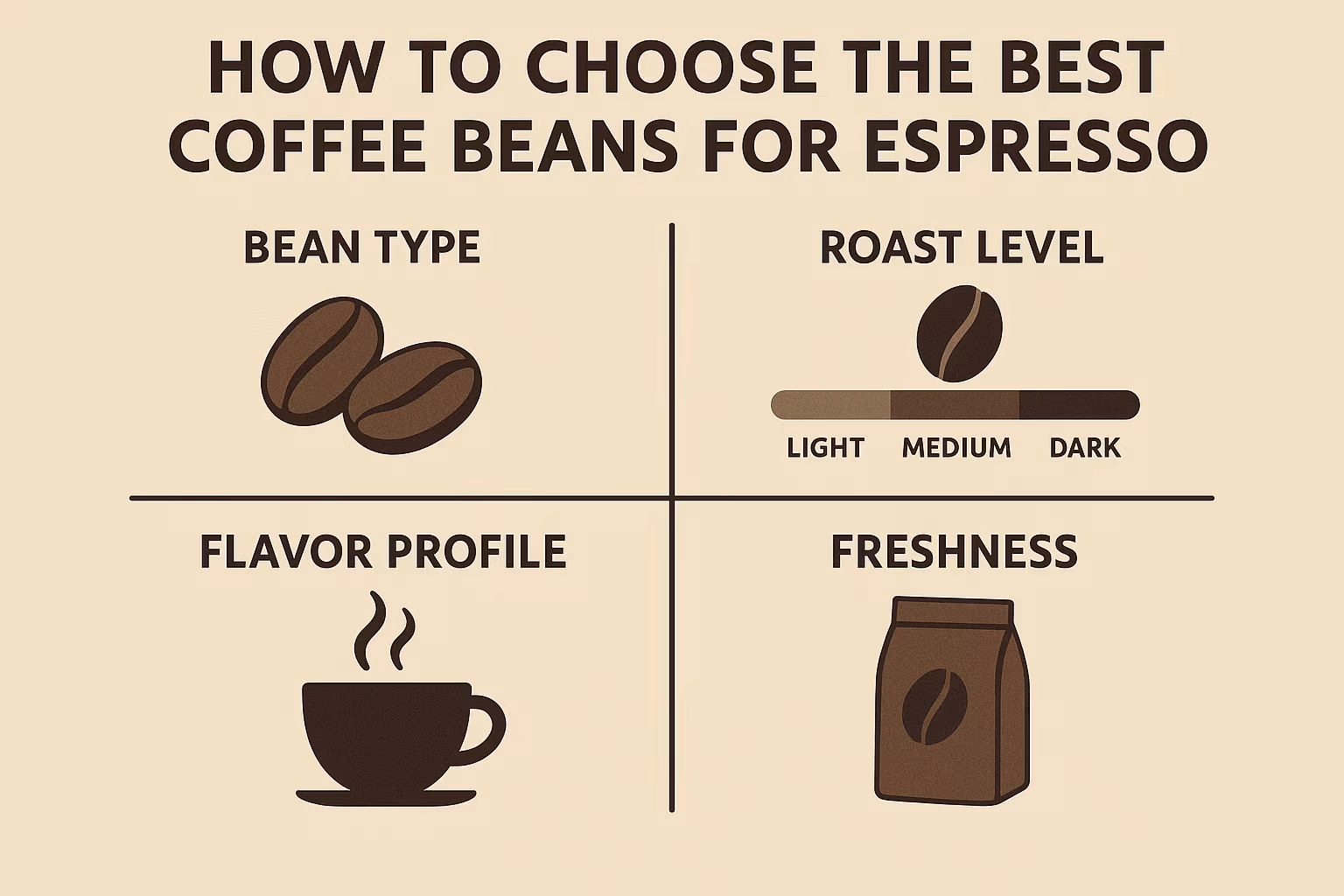
Learning how to choose the best coffee beans for espresso starts with understanding that there is no single bean, roast level, or blend that works best for everyone. The right choice depends on the flavors you enjoy, whether you drink espresso straight or with milk, and how much control you have over your grinder and espresso machine.
The right beans depend on the flavors you enjoy, whether you drink espresso straight or with milk, and how much control you have over your grinder and espresso machine.
Some people prefer a rich, chocolate-forward espresso with plenty of body. Others enjoy brighter shots with fruit, floral notes, or more noticeable acidity. Neither style is automatically better.
This guide explains what to look for when choosing coffee beans for espresso and how factors such as roast level, Arabica versus Robusta, freshness, flavor profile, and grinding can affect your choice.
How to Choose the Best Coffee Beans for Espresso
There is no single type of coffee bean that is always best for espresso.
As a practical starting point:
- Choose medium to medium-dark roasts if you prefer chocolate, caramel, nutty flavors, and fuller body.
- Consider lighter roasts if you enjoy brighter acidity and more distinctive fruit or floral characteristics.
- Choose an espresso blend if you want a profile specifically developed around espresso extraction.
- Consider single-origin coffee if you want to explore more distinctive characteristics from a particular region or producer.
- Look for whole beans and grind them shortly before brewing whenever possible.
- For cappuccinos and lattes, fuller and sweeter profiles can remain more noticeable after milk is added.
If you want specific recommendations rather than a general buying guide, see our 7 Best Whole Bean Espressos for Rich, Café-Quality Coffee at Home.
Can You Use Any Coffee Beans for Espresso?
Technically, espresso is a brewing method, not a particular type of coffee bean.
This means you do not need beans labeled specifically as “espresso beans” to make espresso.
Coffee marketed as an espresso blend or espresso roast has generally been selected, blended, roasted, or positioned by the roaster with espresso preparation in mind. However, other coffees can also produce enjoyable espresso when properly dialed in.
The label is therefore useful guidance, but it should not be treated as a strict rule.
Instead, consider the complete combination of:
- Roast level
- Bean composition
- Origin
- Flavor profile
- Freshness
- Your preferred drinks
- Your grinder and espresso machine
Arabica vs. Robusta for Espresso
Two terms you will frequently encounter when shopping for espresso coffee are Arabica and Robusta.
They can produce noticeably different characteristics in the cup, although species alone does not determine whether a coffee will make good espresso.
Arabica
Arabica coffees can offer a wide range of flavor characteristics, including chocolate, caramel, nuts, fruit, citrus, and floral notes.
Many specialty espresso coffees use 100% Arabica, particularly when the goal is to emphasize sweetness, acidity, or origin-specific characteristics.
Robusta
Robusta is commonly associated with stronger bitterness, heavier body, and a different flavor profile from Arabica.
It is also used in many traditional-style espresso blends, often alongside Arabica rather than by itself.
Arabica and Robusta Blends
A blend can combine characteristics of both.
For example, some Italian-style espresso blends use Arabica and Robusta to create a fuller, more traditional espresso profile.
Rather than asking whether Arabica or Robusta is universally better, consider the overall blend and whether its intended flavor profile matches your preferences.
What Roast Level Is Best for Espresso?
One of the most common misconceptions is that espresso must use a dark roast.
It does not.
Light Roast
Light-roasted coffee generally preserves more of the coffee’s origin characteristics and can emphasize fruit, floral notes, and brighter acidity.
When used for espresso, lighter roasts can produce complex and distinctive shots, but they may also require more careful dialing in.
They can be a good choice if you enjoy modern specialty espresso and brighter flavors.
Medium Roast
Medium roasts can provide a useful balance between origin characteristics and roast development.
Depending on the coffee, you may find combinations of:
- Chocolate
- Nuts
- Caramel
- Fruit
- Moderate acidity
- Balanced sweetness
For many home espresso drinkers, a medium roast is a practical place to start.
Medium-Dark and Dark Roast
More developed roasts often emphasize chocolate, toasted, caramelized, and roast-driven characteristics.
They can work particularly well for people who prefer traditional espresso or frequently make milk-based drinks.
However, darker does not automatically mean better for espresso.
The best roast level is the one that produces the flavor profile you prefer and works well with your equipment.
Single-Origin vs. Espresso Blend
Another choice is whether to buy a single-origin coffee or a blend.
Espresso Blends
A blend combines coffees selected to create a particular overall profile.
For espresso, a roaster may build a blend around characteristics such as:
- Body
- Sweetness
- Acidity
- Chocolate notes
- Fruit characteristics
- Performance with milk
Blends can be a convenient starting point because they are often developed to provide a recognizable and relatively consistent style.
Single-Origin Coffee
Single-origin coffee comes from a more specific geographic source, although the exact meaning can range from a country or region to an individual farm or lot.
As espresso, these coffees can highlight distinctive characteristics associated with their origin, variety, processing, and roast.
They can be especially interesting if you enjoy exploring different flavor profiles.
Neither single-origin nor blended coffee is inherently superior. They simply serve different preferences.
Choose Beans Based on Flavor Profile
Instead of focusing only on roast terminology, read the flavor information on the bag.
Chocolate, Caramel and Nutty Profiles
These are useful starting points if you prefer:
- Traditional-style espresso
- Cappuccino
- Latte
- Flat white
- Lower perceived acidity
These flavors often integrate naturally with milk.
Fruit and Citrus Profiles
Look toward coffees with fruit, berry, stone-fruit, or citrus descriptions if you prefer brighter and more distinctive espresso.
These profiles can be particularly interesting when drinking espresso straight.
Floral and Tea-Like Profiles
Some lighter specialty coffees can have delicate floral or tea-like characteristics.
These can produce highly distinctive espresso but may be less suitable for someone specifically looking for a heavy, traditional shot.
The important point is that tasting notes are descriptions rather than added flavors. They help communicate what the coffee may remind you of when brewed.
Match the Beans to the Drinks You Make
Your usual drink is one of the easiest ways to narrow your options.
For Straight Espresso
If you primarily drink espresso without milk, you can explore a wider range of profiles.
You might prefer:
- Chocolate and caramel
- Balanced sweetness and acidity
- Bright fruit
- Citrus
- Floral characteristics
Because there is no milk to modify the flavor, subtle differences between coffees can be more noticeable.
For Cappuccinos and Lattes
Milk changes the overall balance of the drink.
A fuller coffee with chocolate, nutty, caramelized, or darker fruit characteristics can remain noticeable after milk is added.
That does not mean lighter coffee cannot be used with milk. It simply means you should consider whether the coffee’s character will produce the type of milk drink you enjoy.
For Americanos
An Americano dilutes espresso with water, so a balanced coffee with enough sweetness and character to remain noticeable after dilution can work well.
Again, personal preference matters more than a rigid roast rule.
Freshness Matters, but Avoid Rigid Rules
Freshness is important when choosing whole coffee beans, but there is no universal rule saying every coffee must be consumed within an exact number of days after roasting.
Coffee changes over time.
Very recently roasted beans can release significant carbon dioxide, while older beans gradually lose aromatic intensity.
How quickly these changes matter depends on factors including:
- Roast level
- Packaging
- Storage
- Coffee itself
- Brewing method
- Personal preference
When possible, look for a roast date rather than relying only on a distant expiration date.
Buy an amount appropriate for how quickly you normally consume coffee instead of automatically choosing the largest bag.
Why Whole Beans Are Better for Dialing In Espresso
For espresso, the grinder is nearly as important as the beans.
Espresso extraction is sensitive to grind size. Even relatively small adjustments can change how quickly water moves through the coffee puck and therefore alter the resulting shot.
Buying whole beans allows you to adjust the grind for:
- Different coffees
- Different roast levels
- Changes as coffee ages
- Different doses and yields
- Your particular espresso machine
Pre-ground coffee removes much of this control.
If you are choosing a grinder for espresso, see our guide to the 7 Best Electric Burr Grinders for Home Brewing.
How to Dial In New Espresso Beans
Buying good beans does not guarantee good espresso immediately.
A new coffee usually requires some adjustment.
A practical dialing-in process is:
- Start with a repeatable dose.
- Grind the coffee immediately before brewing.
- Keep your preparation technique consistent.
- Observe the amount of espresso produced and extraction behavior.
- Taste the espresso.
- Adjust one major variable at a time.
If the espresso flows much faster than expected, a finer grind may help slow the extraction.
If it flows extremely slowly or the machine struggles to push water through the puck, a coarser grind may be appropriate.
But time alone should not determine whether a shot is good.
Use extraction time as diagnostic information alongside taste, dose, yield, and consistency rather than treating one specific number as a universal target.
How to Store Espresso Beans
Good storage helps slow flavor degradation.
Keep Beans Away From Air
Repeated exposure to air accelerates oxidation.
Use the original resealable coffee bag if it is designed for storage, or transfer the beans to a suitable airtight container.
Protect Them From Heat and Light
Store coffee in a cool, dry location away from direct sunlight, ovens, stovetops, or other heat sources.
A kitchen cabinet can often be more appropriate than leaving a transparent container on a sunny countertop.
Avoid Unnecessary Moisture
Coffee should be protected from moisture and large temperature fluctuations during everyday storage.
Buy an Appropriate Quantity
One of the simplest storage strategies is to avoid buying substantially more coffee than you can reasonably use.
A larger bag may have a lower cost per ounce, but that advantage is less useful if much of the coffee sits open for a long period.
Common Mistakes When Choosing Espresso Beans
Mistake 1: Assuming Espresso Must Be Dark Roast
Dark roast is one option, not a requirement.
Choose based on flavor preference rather than the assumption that darker automatically means more suitable for espresso.
Mistake 2: Choosing Beans Based Only on the Word “Espresso”
“Espresso” on a bag provides useful context, but examine the roast, tasting notes, composition, and intended use as well.
Mistake 3: Ignoring Your Preferred Drink
The best coffee for straight espresso may not necessarily be your favorite in a large latte.
Choose according to what you actually drink most often.
Mistake 4: Buying Too Much Coffee
Large bags can appear economical but may not make sense for a household that uses beans slowly.
Mistake 5: Ignoring the Grinder
Changing to higher-quality beans cannot compensate for every grinding problem.
A capable burr grinder gives you much greater control over espresso extraction than a basic blade grinder.
Mistake 6: Changing Too Many Variables at Once
When dialing in espresso, changing grind size, dose, tamping, yield, and other variables simultaneously makes it difficult to understand what improved or worsened the shot.
Make controlled adjustments instead.
A Simple Espresso Bean Buying Checklist
Before buying a bag, ask yourself:
1. How will I drink it?
Straight espresso, Americano, cappuccino, latte, or a mixture?
2. What flavors do I enjoy?
Chocolate and nuts? Caramel? Fruit? Citrus? Floral characteristics?
3. What roast level sounds appealing?
Light, medium, medium-dark, or dark?
4. Do I want a blend or single origin?
A consistent espresso-oriented profile or something more origin-focused?
5. Is it whole bean?
Whole beans provide more control over espresso grinding.
6. Is freshness information available?
A roast date can be useful when available.
7. Can I finish the quantity reasonably?
Avoid buying purely on bag size.
Once you know those answers, choosing among espresso coffees becomes considerably easier.
Frequently Asked Questions
What coffee beans are best for espresso?
There is no single best type.
Medium and medium-dark coffees can be approachable starting points for traditional espresso flavors, while lighter coffees can work well for people who enjoy brighter specialty espresso.
Choose according to flavor, intended drink, freshness, and how well you can dial the coffee in.
Do I need special espresso beans?
No.
Espresso is a brewing method. Coffee does not have to carry an “espresso” label to be used in an espresso machine.
Espresso-specific blends can nevertheless be useful because the roaster has developed or recommended them with espresso preparation in mind.
Is dark roast best for espresso?
Not necessarily.
Dark roast can produce the richer roast-driven profile many people associate with traditional espresso, but medium and lighter coffees can also make excellent espresso.
Is Arabica better than Robusta for espresso?
Not universally.
Arabica, Robusta, and blends of the two can all be used for espresso. Their characteristics differ, so choose based on the overall coffee rather than treating one species as automatically superior.
Are espresso blends better than single-origin beans?
Neither is inherently better.
Blends can provide a deliberately constructed and potentially more familiar profile, while single-origin coffees can emphasize distinctive characteristics from a particular source.
Should I buy whole-bean or ground coffee for espresso?
Whole bean is generally preferable when you have an appropriate grinder because it allows you to adjust grind size for your machine and each coffee.
How fresh should espresso beans be?
Look for reasonably fresh coffee and a roast date when available, but avoid treating an exact number of days as a universal rule.
Coffee behaves differently according to roast, packaging, storage, and preparation.
Can I use regular coffee beans in an espresso machine?
Yes.
You may need to adjust grind size and other brewing variables, but coffee does not have to be labeled “espresso” to be brewed as espresso.
Conclusion
Learning how to choose the best coffee beans for espresso becomes much easier once you stop looking for one universal “espresso bean.”
Start with the drinks you make most often and the flavors you enjoy. Then consider roast level, Arabica versus Robusta, blends versus single origins, freshness, and whether you have a grinder capable of dialing in the coffee.
For a traditional profile, you may prefer medium to darker coffees emphasizing chocolate, caramel, nuts, and body. For a more modern specialty style, lighter coffees can introduce brighter fruit, acidity, and more distinctive origin characteristics.
Most importantly, remember that the beans and brewing process work together. Good coffee still needs an appropriate grind and a repeatable extraction process.

My name is Kara Chavez, and I’m a coffee writer and researcher at MTN Lyon Cafe.
I’m interested in coffee equipment, brewing methods, espresso, coffee beans, and practical ways to make better coffee at home. My work focuses on researching product information, comparing features, reviewing third-party testing and consumer feedback, and turning that information into clear, useful guides for coffee lovers.
At MTN Lyon Cafe, I aim to help readers better understand coffee products, improve their brewing knowledge, and make more informed purchasing decisions.