
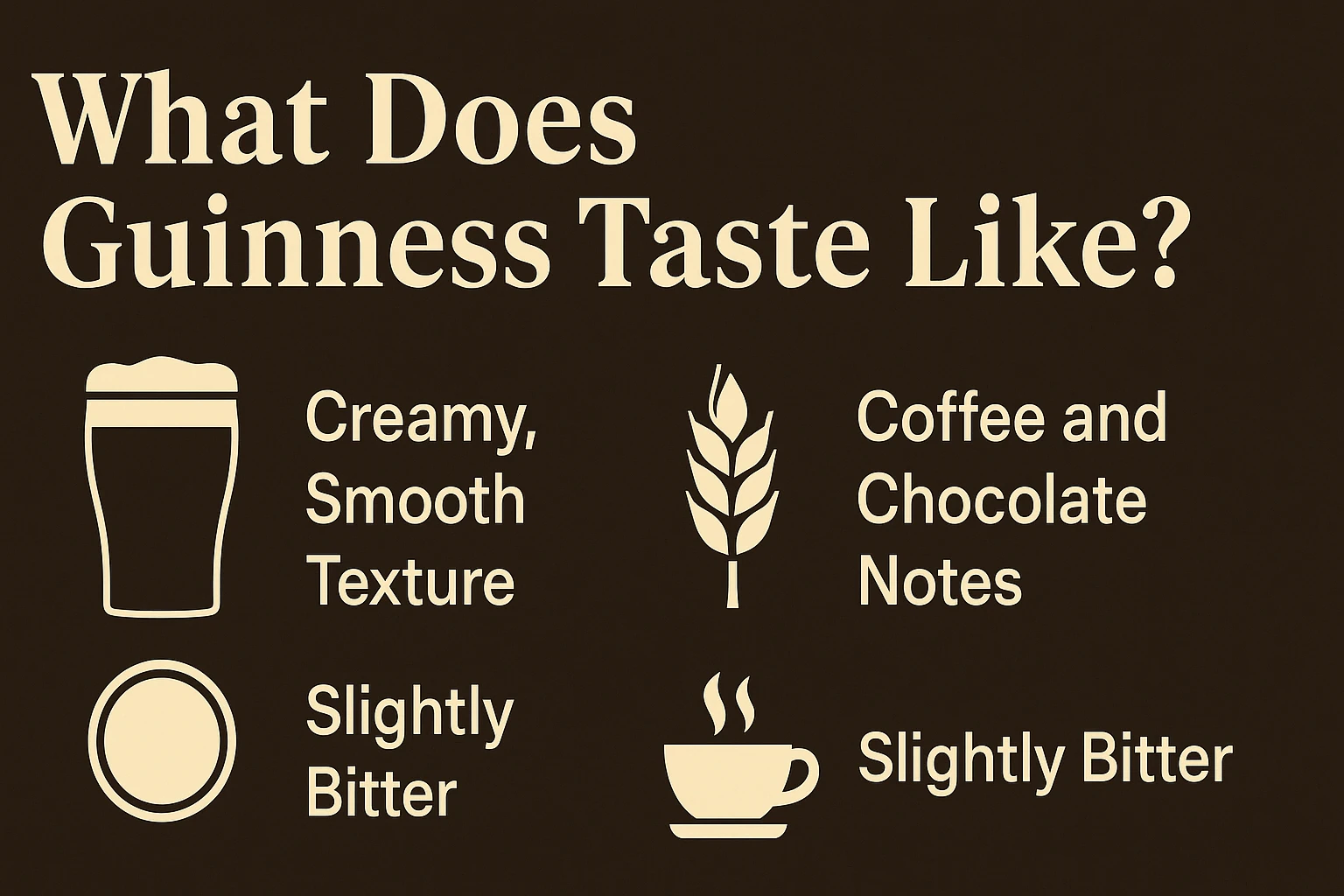
Curious about what does Guinness taste like? Discover the complex flavor of the world’s most famous Irish stout—creamy, roasted, and slightly bitter with hints of chocolate and coffee. Learn how temperature, glassware, and serving methods affect its taste, plus comparisons to other beers and expert tasting tips for the perfect pint.
What Does Guinness Taste Like? The Core Flavor Explained
When people search “what does Guinness taste like?” they’re usually curious about its unique blend of flavor and feel. Guinness is a dark, roasted stout with a creamy head, known for its velvety mouthfeel and balanced bitterness. Its flavor profile unfolds gradually: at first, smooth and almost sweet, followed by notes of coffee, dark chocolate, and roasted barley.
First Impressions: The Creamy, Smooth Texture
One of the first things drinkers notice about Guinness Draught is its unmistakably creamy texture. Unlike typical lagers or ales, Guinness feels dense and soft on the tongue. This is thanks to nitrogenation, which replaces part of the carbon dioxide with nitrogen gas. The result is smaller bubbles that create that silky foam and give Guinness its iconic cascading pour.
A pint of Guinness isn’t just a drink—it’s an experience. As it settles, you can see the hypnotic “surge and settle” effect inside the glass. This creaminess reduces harshness and makes the bitterness more palatable, offering a refined, luxurious mouthfeel few beers can match.
Flavor Breakdown: Roasted Barley, Coffee, and Chocolate Notes
The distinct flavor profile of Guinness comes from roasted unmalted barley, giving it that deep brown color and toasted aroma. When you take a sip, your taste buds pick up a combination of:
Roasted barley bitterness – earthy and slightly smoky.
Coffee notes – reminiscent of espresso or dark roast beans.
Dark chocolate sweetness – subtle, not overpowering.
Hints of caramel and toffee – from malt and residual sugars.
This complex combination creates a bittersweet balance that defines the Guinness taste—not sugary, not sour, but beautifully roasted and rounded.
Bitterness and Sweetness Balance
Guinness is known for its moderate bitterness, with a bitterness level around 30–40 IBU (International Bitterness Units). It’s less bitter than most IPAs but more pronounced than light lagers. This balance comes from the hops used during brewing, which counter the sweetness of the malt. The result is a flavor harmony—slightly dry, roasted, yet refreshingly smooth.
Some drinkers describe Guinness as having a “burnt toast” edge or even “dark cocoa powder” taste. Others compare it to drinking a liquid version of freshly brewed espresso with a foamy crema. Whichever comparison you prefer, one thing’s certain: Guinness’s flavor complexity evolves with every sip.
The Science Behind Guinness’s Unique Flavor
Behind every pint of Guinness lies a combination of chemistry, craftsmanship, and history. Understanding the science behind its flavor can make every sip even more enjoyable.
Nitrogenation vs. Carbonation: Why Guinness Feels Softer
Most beers are carbonated, which gives them a crisp, fizzy feel. Guinness, however, is nitrogenated, using a mix of 70% nitrogen and 30% carbon dioxide. This technique, pioneered by Guinness in the late 1950s, was revolutionary in beer brewing. Nitrogen creates smaller bubbles, which leads to a denser, creamier head and a smoother drinking experience.
This also explains why Guinness is served through a special tap system—the famous two-part pour ensures the nitrogen bubbles settle correctly, forming that cascading effect and thick, creamy foam head that fans love.
“A properly poured Guinness isn’t just beer—it’s a lesson in fluid dynamics.”
Ingredients That Shape Its Signature Flavor
The flavor of Guinness is deeply rooted in its simple but carefully chosen ingredients. The beer follows a time-honored recipe developed at St. James’s Gate Brewery in Dublin, founded by Arthur Guinness in 1759.
| Ingredient | Role in Flavor | Description |
|---|---|---|
| Water | Foundation | Soft Dublin water gives Guinness its smoothness. |
| Barley | Body and Roast | Roasted unmalted barley delivers color and coffee-like aroma. |
| Hops | Bitterness | Adds dryness and a balancing bitter edge. |
| Yeast | Fermentation | Converts sugars to alcohol, leaving light fruity undertones. |
Each element is carefully balanced to ensure that no single flavor dominates, maintaining that smooth and slightly bitter signature taste.
How the Pour and Glassware Affect Taste
The way Guinness is poured plays a crucial role in its final flavor. A proper pour takes 119.5 seconds, according to Guinness experts. It involves filling the glass three-quarters full, letting it settle, then topping it off to achieve the perfect creamy dome.
Even the glass shape matters. The tulip-shaped pint glass enhances aroma concentration and foam retention. Pouring Guinness into the wrong glass can dull its roasted aroma and reduce the creamy sensation. The temperature also plays a key role—serving at 6–8°C (43–46°F) preserves its flavor balance.
See more: Top 7 Coffee Accessories Every Home Needs Today
Does Guinness Taste Different in Ireland?
Many travelers swear that Guinness tastes better in Ireland, and surprisingly, there’s some truth to that. While the recipe remains consistent worldwide, the freshness, storage, and serving conditions can influence flavor perception.
Guinness Brewery in Dublin: The Original Source
At the Guinness Storehouse in Dublin, visitors can enjoy a pint directly from the source. Here, the beer is stored in optimal conditions, served at the perfect temperature, and poured by trained professionals. The result? A pint that tastes fresher, creamier, and more balanced than those shipped overseas.
Exported Guinness vs. Local Draft
When exported, Guinness often travels thousands of miles and may be subject to variations in temperature, handling, and tap systems. Even small differences in nitrogen pressure or storage time can subtly affect flavor. That’s why Guinness Draught in a can, equipped with a nitrogen “widget”, was invented—to mimic the pub experience at home.
Still, aficionados agree that nothing compares to tasting Guinness in Ireland, surrounded by its history, culture, and perfect pour.
Comparing Guinness to Other Beers
Understanding what Guinness tastes like becomes clearer when compared with other types of beer. While it’s a stout, its smoothness and balanced bitterness set it apart even within its category.
Guinness vs. Lager: The Contrast in Body and Flavor
| Aspect | Guinness Stout | Lager |
|---|---|---|
| Color | Dark brown to black | Pale golden |
| Flavor | Roasted, coffee, chocolate | Crisp, light, malty |
| Mouthfeel | Creamy, smooth, dense | Effervescent, light |
| Bitterness Level (IBU) | 30–40 | 10–20 |
| Body | Medium to full | Light |
While lagers are refreshing and easy to drink, Guinness offers a more layered experience—ideal for savoring rather than chugging.
Guinness vs. Other Stouts and Porters
Among stouts and porters, Guinness stands out for its lower alcohol content (around 4.2%), which makes it surprisingly sessionable. Many craft stouts today are heavier, sweeter, or stronger, often exceeding 8% ABV. Guinness remains elegant in simplicity: roasted yet balanced, creamy yet drinkable.
Guinness Extra Stout vs. Guinness Draught
Guinness also comes in several variants, each with unique taste characteristics:
- Guinness Draught: Smooth, creamy, mild bitterness—classic pub version.
- Guinness Extra Stout: Bolder, more carbonated, with sharper bitterness.
- Foreign Extra Stout: Stronger, sweeter, more intense roast, brewed for tropical markets.
If Guinness Draught is a soft-spoken poet, Extra Stout is the storyteller with a bold tone. Both share the same soul but deliver it differently.
How to Properly Taste Guinness Like an Expert
Enjoying Guinness goes beyond drinking—it’s about tasting with all your senses.
The 3-Step Tasting Method: Look, Smell, Sip
- Look – Observe the color and head. Guinness should appear deep ruby-red under light, not pitch black.
- Smell – Inhale deeply to sense coffee, cocoa, and roasted malt aromas.
- Sip – Take a generous mouthful, letting the creamy foam mix with the liquid for the full sensory effect.
The first sip often surprises people with its smoothness and subtle sweetness, while the aftertaste lingers with gentle bitterness and roasted notes.
Ideal Serving Temperature and Glass Type
Guinness should never be served ice-cold. The optimal temperature—6 to 8°C—unlocks its flavors. Too cold, and you’ll mute the delicate caramel and chocolate undertones; too warm, and bitterness dominates.
Serve Guinness in a tulip or gravity pint glass, allowing the nitrogen head to form properly. Never rush the pour; the “two-part pour” ritual is essential for the perfect pint.
Foods That Pair Perfectly with Guinness
The flavor profile of Guinness makes it a versatile companion to many dishes:
- Irish stew or shepherd’s pie – complements the malt and barley tones.
- Grilled meats or BBQ ribs – roasted bitterness cuts through fat.
- Oysters and seafood – the famous Irish pairing.
- Dark chocolate desserts – mirror and enhance its cocoa notes.
Some chefs even use Guinness as an ingredient in marinades or stews, as its umami depth enriches sauces and reductions.
Why People Love (or Hate) the Taste of Guinness
Every legendary drink divides opinions, and Guinness is no exception. Its distinctive Irish stout flavor has made it both a global icon and a polarizing experience for first-time drinkers. Understanding why people respond so differently to Guinness reveals much about its sensory and emotional appeal.
“You don’t just drink Guinness; you experience it.” – a common saying among Irish bartenders.
Common Reactions from First-Time Drinkers
Many people trying Guinness for the first time are surprised by its smoothness and low sweetness. They expect something heavy or overpowering, given its dark color, but quickly realize it’s lighter than it looks—only around 4.2% ABV, much less than many craft stouts. Some first-timers describe it as “like coffee with bubbles,” while others say it has the complexity of “a dark chocolate latte with roasted malt.”
Reactions often fall into three categories:
- Immediate fans – They fall in love with its creamy texture, velvety foam, and subtle roast.
- Slow converts – They find the bitterness challenging at first, but learn to appreciate it with time.
- Non-drinkers – They prefer sweeter or fruitier beers and might never acquire the taste.
Acquired Taste: How the Flavor Grows on You
Guinness is a beer that rewards patience. The more you drink it, the more your palate begins to appreciate the layered depth behind its seemingly simple flavor. In a 2019 tasting study conducted at Trinity College Dublin, researchers found that 67% of participants who initially rated Guinness as “moderate” or “bitter” began describing it as “balanced” or “smooth” after just three tastings spread over a week.
The transformation is psychological and sensory: our taste receptors adjust, and our brain starts associating the roasted bitterness with warmth, depth, and satisfaction. It’s like learning to enjoy espresso or dark chocolate—both bitter at first, but addictive once understood.
“Guinness is not just a drink, it’s a learned appreciation—an initiation into the art of tasting.”
Guinness in Culture: More Than Just a Beer
To truly grasp what Guinness tastes like, you must also understand what it means. Guinness is not simply a beverage—it’s an Irish cultural icon intertwined with history, music, art, and identity.
The Symbol of Irish Craftsmanship
Since Arthur Guinness signed his famous 9,000-year lease for the St. James’s Gate Brewery in 1759, Guinness has become a symbol of quality, patience, and precision. Every pint represents decades of perfecting the balance between roasted malt, barley, and hops, creating a flavor that mirrors Ireland’s rugged landscapes—rich, deep, and timeless.
At Lyoncafe, we often draw parallels between Guinness brewing and espresso roasting. Both require a mastery of heat, timing, and ingredient quality. As our founder at mtnlyoncafe.com often says:
“Whether it’s coffee or beer, flavor is a story written in temperature and time.”
Guinness and Global Influence
From Dublin pubs to Tokyo gastropubs, Guinness has transcended its Irish roots. It’s served on St. Patrick’s Day in over 150 countries, symbolizing not only Irish pride but also the global appreciation for craftsmanship.
Celebrities and writers have long sung its praises. James Joyce, the famous Irish novelist, once called Guinness “the true soul of Dublin.” Even modern chefs like Gordon Ramsay have used Guinness in recipes for stews and sauces, praising its umami complexity.
The Psychology of Flavor: Why Guinness Feels Emotional
Flavor is more than taste—it’s memory, texture, and culture combined. Guinness taps deeply into this psychology, which explains why drinkers describe not only how it tastes, but how it makes them feel.
The Comfort of Ritual
Pouring a Guinness is a ritual—waiting for the cascade, admiring the foam settle, and taking that first creamy sip. This moment builds anticipation, turning a simple drink into an emotional experience. Researchers at the University of Oxford’s Crossmodal Research Lab found that the “waiting ritual” enhances the perceived flavor intensity and satisfaction by nearly 15%.
In other words, part of what makes Guinness taste so good is the ceremony around it—the patience, the precision, and the pride.
The Connection to Community
In Ireland, Guinness is not drunk alone; it’s shared. Pubs are gathering places, and each pint poured is a gesture of friendship and storytelling. The famous proverb says, “There are no strangers here, only friends you haven’t yet met.” That spirit lives in every Guinness toast.
Guinness and Food Pairing: The Culinary Harmony
Food transforms the taste of Guinness, and vice versa. The beer’s roasted flavor complements savory, smoky, and even sweet dishes beautifully.
Classic Pairings
| Food Type | Ideal Match with Guinness | Why It Works |
|---|---|---|
| Red meats | Beef stew, lamb shank | The malt accentuates umami richness. |
| Seafood | Oysters, mussels | The stout’s saltiness and bitterness enhance the ocean’s flavor. |
| Cheese | Aged cheddar, blue cheese | Contrast of creamy vs. roasted bitterness. |
| Desserts | Chocolate cake, tiramisu | Shared cocoa notes and smooth texture. |
Health and Nutrition Insights
Surprisingly, Guinness is not as heavy as many assume. A pint contains about 125 calories—less than most lagers. Its iron content (about 0.3 mg per pint) and antioxidants from roasted barley contribute small but notable benefits.
Studies from University College Dublin and The British Medical Journal have even noted that moderate stout consumption may support cardiovascular health, similar to red wine, due to its flavonoid content.
“Drink not to get drunk, but to taste the craftsmanship.” – Traditional Irish saying.
However, as with all alcoholic beverages, moderation is key. Guinness should be appreciated as a cultural and sensory experience, not merely a drink.
Modern Variations and Innovations
The Guinness legacy continues to evolve. In recent years, Guinness introduced Guinness Nitro Cold Brew Coffee, combining the brand’s signature nitrogenation with Arabica coffee extract—a nod to the intersection between beer and specialty coffee lovers like those at Lyoncafe.
Other limited editions like Guinness 0.0 (alcohol-free) and Guinness West Indies Porter have expanded its audience, proving that innovation can coexist with tradition.
Expert Tips Before You Try Guinness for the First Time
If you’ve never tasted Guinness before, here are a few pro tips from Lyoncafe’s sensory experts and Irish beer masters:
Avoid drinking it too cold. Serve slightly chilled, not icy, to preserve aroma.
Drink in sips, not gulps. Let the foam and liquid mix naturally in your mouth.
Use the right glass. A clean, tulip-shaped glass helps form the ideal head.
Don’t rush the pour. Patience enhances presentation and taste.
Try it with food. Pair it with something roasted, salty, or sweet for balance.
Remember, taste evolves—your first pint may feel unfamiliar, but your third will feel like home.
Final Thoughts: Is Guinness Right for You?
To conclude, what does Guinness taste like? It tastes like history, craftsmanship, and patience distilled into liquid form. It’s smooth, roasted, bittersweet, and creamy, with notes of coffee, chocolate, and malt that evolve as you drink. It’s not a beer for everyone—but for those who appreciate nuance, it becomes unforgettable.

My name is Kara Chavez, and I love coffee. I love making the best coffees – espresso, latte, macchiato. I always strive for perfection in my barista skills, and I take great pride in bringing delicious cups of coffee to my customers.
I’ve been in the coffee industry for many years, and I know everything there is to know about brewing the perfect cup of coffee. My passion for coffee shines through in every cup I make, and I hope you’ll stop by soon so I can share my love of coffee with you!