The best whole bean espressos balance sweetness, body, acidity, and roast character in a way that works well under the concentrated extraction of an espresso machine. But there is no single roast level or flavor profile that defines good espresso.
Some espresso blends emphasize chocolate, nuts, and caramel, while others preserve brighter fruit characteristics. The right choice depends on whether you prefer straight espresso, Americanos, cappuccinos, lattes, or other milk-based drinks.
In this guide, we compare seven whole-bean coffees designed for or particularly well suited to espresso, ranging from accessible Italian-style blends to specialty coffees from established U.S. roasters.
Quick Comparison: 7 Whole Bean Espressos
| Coffee | Profile | Best For | Notable Characteristics |
|---|---|---|---|
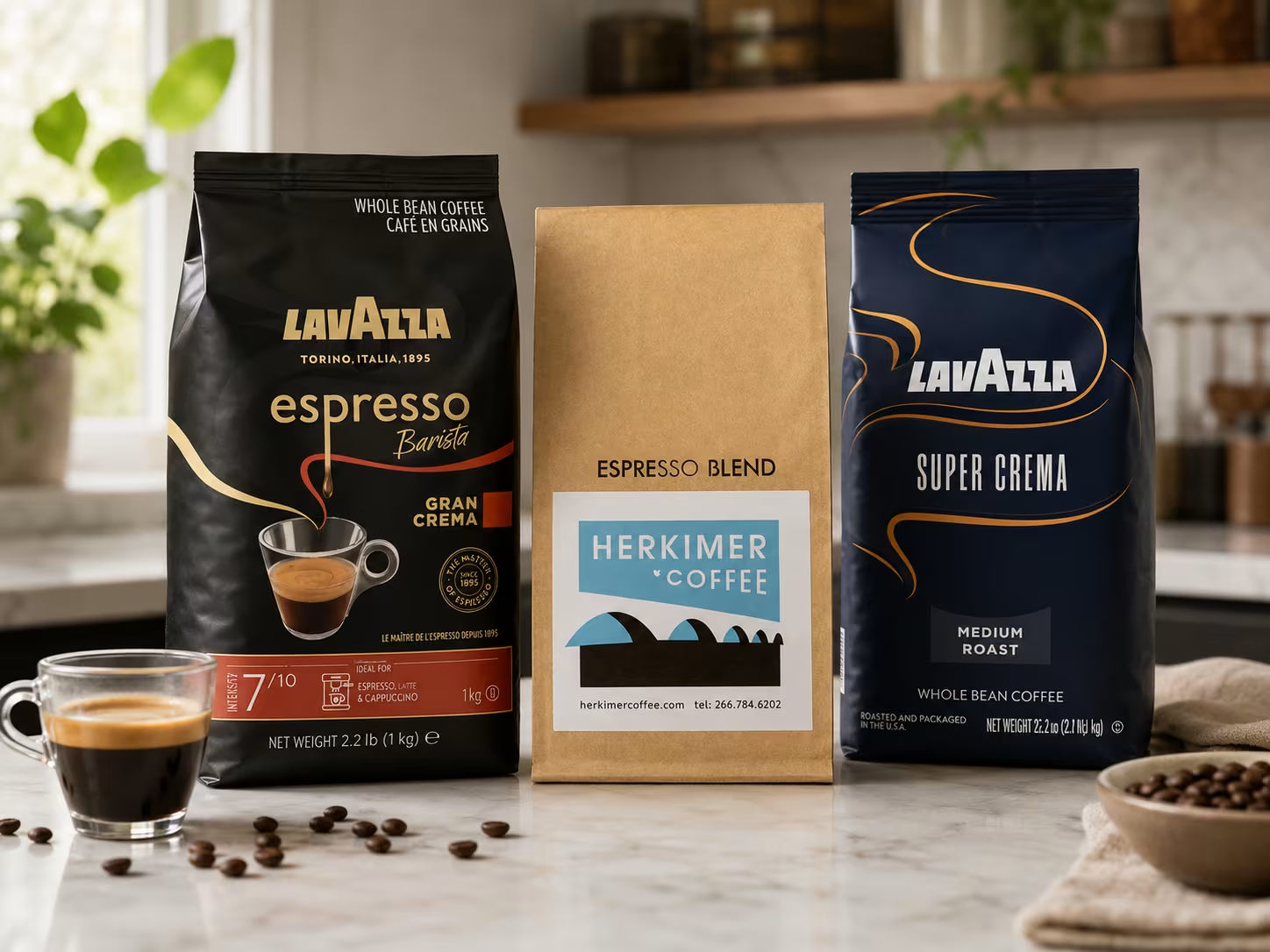
| Lavazza Espresso Barista Gran Crema | Light roast | Everyday espresso | Biscotti, honey, roasted cereal |
| Herkimer Coffee Espresso Blend | Balanced, full body | Espresso & milk | Chocolate, cherry, citrus |
| Lavazza Super Crema | Medium roast | Accessible daily espresso | Nutty, balanced profile |
| Onyx Coffee Lab Monarch | Expressive dark | Milk drinks | Dark chocolate, molasses, dried berries |
| Intelligentsia Black Cat Classic | Lighter espresso profile | Straight espresso | Cherry, cola, orange |
| Stumptown Hair Bender | Balanced espresso blend | Versatility | Citrus, dark chocolate, raisin |
| Blue Bottle Hayes Valley Espresso | Dark roast | Ristretto & milk drinks | Baking chocolate, orange zest, brown sugar |
The flavor descriptions above reflect information published by the respective coffee roasters rather than our own tasting tests.
How We Selected These Whole Bean Espressos
This is a research-based comparison rather than a hands-on tasting test.
We reviewed information published by the roasters, including intended brewing methods, roast profile, blend composition where disclosed, tasting notes, suitability for straight espresso or milk-based drinks, and overall versatility.
We also considered whether each coffee offers a meaningfully different option. The purpose is not to suggest that one flavor profile is universally superior, but to help you identify a whole-bean espresso that fits the way you drink coffee.
Coffee composition, harvests, availability, and product specifications can change over time, so check current product information before purchasing.
1. Lavazza Espresso Barista Gran Crema – Everyday Italian-Style Pick
Lavazza Espresso Barista Gran Crema is an Arabica-and-Robusta blend sourced from multiple regions, including Africa, Central and South America, and Southeast Asia.
Lavazza describes it as a light roast with an aromatic, full-bodied profile and notes of baked biscotti, honey, and roasted cereal. The company identifies espresso as its intended preparation.
That combination makes Gran Crema relevant for people looking for an accessible everyday espresso rather than a highly fruit-forward specialty profile.
Best For: Everyday espresso and households that prefer a traditional-style blend.
Pros:
- Arabica and Robusta blend
- Specifically intended for espresso
- Full-bodied profile
- Widely recognizable coffee brand
Cons:
- Large bags may not suit low-volume coffee drinkers
- Less appropriate if you specifically want a bright, fruit-forward specialty espresso
Check Lavazza Espresso Barista Gran Crema on Amazon
2. Herkimer Coffee Espresso Blend – Balanced Specialty Pick
Herkimer’s Espresso Blend takes a different approach.
The roaster describes it as a blend sourced from relationship farms in Central America, South America, and Africa, designed both for straight espresso and pairing with milk.
Its published flavor description includes dark chocolate, black cherry, Meyer lemon zest, cocoa nib, and a graham-cracker character.
Herkimer also provides espresso preparation guidance for both straight shots and milk drinks, which can provide home baristas with a useful starting point when dialing in the coffee.
Best For: Specialty-coffee drinkers seeking a balance of chocolate and fruit.
Pros:
- Designed for straight espresso and milk
- Full-bodied profile
- Espresso preparation guidance available
- Blend combines multiple coffee-growing regions
Cons:
- More complex flavor profile may not appeal to people seeking very traditional dark espresso
- Availability can be more limited than large national brands
Check Herkimer Coffee Espresso Blend on Amazon
3. Lavazza Super Crema – Accessible Medium-Roast Pick
Lavazza Super Crema is another Arabica-and-Robusta blend, but its profile differs from Gran Crema.
Lavazza lists Super Crema as a medium roast, combining coffees from Asia and South America. The coffee is described as aromatic and medium-bodied, with a nut-focused profile.
For someone moving from pre-ground or supermarket coffee toward whole-bean espresso, Super Crema provides a relatively straightforward entry point without requiring an especially unconventional flavor profile.
Best For: Everyday espresso drinkers seeking a medium-roast Arabica-and-Robusta blend.
Pros:
- Medium roast
- Arabica and Robusta blend
- Nut-focused flavor profile
- Intended for espresso
Cons:
- May be less interesting to drinkers seeking distinctive specialty-coffee acidity
- Package sizes and availability can vary
Check Lavazza Super Crema on Amazon
4. Onyx Coffee Lab Monarch – Best Suited to Milk Drinks
Onyx Monarch is particularly relevant for cappuccino and latte drinkers.
Onyx describes Monarch as one of its more developed profiles and positions the coffee to work particularly well with milk. Its profile combines coffees from Colombia and Ethiopia and is categorized as Expressive Dark.
The published flavor profile includes dark chocolate, molasses, red wine, dried berries, and a thick, syrupy character.
That makes it an interesting option for people who want the espresso character to remain noticeable after milk is added.
Best For: Cappuccinos, lattes, and other milk-based espresso drinks.
Pros:
- Designed to work well with milk
- Dark chocolate and fruit-oriented profile
- Espresso preparation guidance available
- Can also suit other brewing methods
Cons:
- More developed profile may not suit people seeking very light espresso
- Specialty pricing compared with mass-market blends
Check Onyx Coffee Lab Monarch on Amazon
5. Intelligentsia Black Cat Classic Espresso – Brighter Espresso Pick
Black Cat Classic is Intelligentsia’s longstanding signature espresso blend.
The company describes it as its lighter-style espresso, with syrupy sweetness and noticeable fruit acidity. Published tasting notes include cherry, cola, and orange.
That profile makes Black Cat Classic particularly relevant to drinkers who want espresso to retain noticeable acidity and fruit character instead of leaning entirely toward dark chocolate and roast flavors.
Best For: Straight espresso drinkers who enjoy sweetness with brighter fruit acidity.
Pros:
- Espresso-specific blend
- Fruit-forward characteristics
- Brewing guidance available
- Established specialty espresso line
Cons:
- Brighter acidity may not suit traditional dark-roast preferences
- Requires careful dialing in to get the most from the coffee
Check Intelligentsia Black Cat Classic Espresso on Amazon
6. Stumptown Hair Bender – Versatile Espresso Blend
Hair Bender is Stumptown’s signature espresso blend and one of the more versatile coffees in this group.
Its published tasting notes include citrus, dark chocolate, and raisin. The blend brings together coffees from Latin America, Indonesia, and East Africa.
Although commonly associated with espresso, Hair Bender can also be used with brewing methods such as pour-over, drip, and French press.
That versatility can be useful in a household where the same bag of beans needs to serve both an espresso machine and conventional coffee brewing.
Best For: Households using multiple brewing methods.
Pros:
- Signature espresso blend
- Citrus, dark chocolate, and raisin profile
- Works across several brewing methods
- Available as whole bean
Cons:
- People seeking a very dark traditional espresso may prefer another profile
- Each brewing method still requires its own grind and recipe adjustments
Check Stumptown Hair Bender on Amazon
7. Blue Bottle Hayes Valley Espresso – Dark-Roast Espresso Pick
For this recommendation, the specific coffee is Blue Bottle Hayes Valley Espresso, rather than simply “Blue Bottle Espresso.”
Hayes Valley is a dark-roast espresso with published flavor notes including baking chocolate, orange zest, and brown sugar. It is designed around a rich, concentrated espresso preparation.
Its fuller, sweeter profile can work both as straight espresso and in milk-based drinks.
Best For: Concentrated espresso and chocolate-forward milk drinks.
Pros:
- Dark-roast espresso profile
- Chocolate and caramelized-sugar characteristics
- Designed for concentrated espresso
- Suitable with or without milk
Cons:
- Darker roast profile will not suit everyone
- Specialty-coffee pricing
Check Blue Bottle Hayes Valley Espresso on Amazon
What Does “Espresso Bean” Actually Mean?
There is no separate botanical category called an espresso bean.
Espresso is fundamentally a brewing method. Coffee sold as an espresso blend or espresso roast is generally coffee that the roaster believes performs particularly well under espresso extraction.
That does not mean every espresso coffee must be dark roasted. Espresso offerings can range from relatively light and fruit-forward profiles to darker, chocolate-focused coffees.
This distinction matters because choosing beans by the word “espresso” alone tells you less than examining the roast, flavor profile, blend composition, and intended preparation.
How to Choose Whole Beans for Espresso
Start With the Drinks You Actually Make
If you usually drink straight espresso, you may appreciate a coffee whose acidity, sweetness, and individual flavor characteristics remain noticeable in a small concentrated shot.
For cappuccinos and lattes, coffees emphasizing chocolate, caramelized sweetness, and body can remain more prominent after milk is added.
Neither approach is inherently better. It depends on your taste.
Consider Roast Profile
Do not assume espresso automatically requires the darkest roast available.
Modern espresso coffees use a wide range of roast profiles. Your preference matters, but your espresso machine, grinder, dose, and extraction technique also influence the final cup.
Buy Whole Bean When Possible
Grinding shortly before brewing gives you greater control over grind size and reduces the amount of time coffee spends exposed to air after grinding.
For espresso in particular, relatively small changes in grind size can substantially affect extraction.
If you need a grinder capable of making those adjustments, see our guide to the 7 Best Electric Burr Grinders for Home Brewing.
Pay Attention to Freshness
Coffee changes after roasting, and espresso dialing may need to change as beans age.
Rather than buying the largest bag simply because the price per ounce is lower, consider how quickly your household actually uses coffee.
Dial In the Coffee
A new bag may require changes to grind size, dose, yield, or extraction time.
There is no single grind setting that works across every grinder and every coffee. Start with the roaster’s recommended recipe when one is available, then adjust according to your equipment and results.
Whole Bean Espresso vs. Regular Coffee Beans
The distinction is less rigid than packaging sometimes suggests.
A coffee labeled for espresso has generally been selected, blended, roasted, or marketed with espresso extraction in mind.
But many espresso coffees can also perform well with other brewing methods. Likewise, a coffee that is not specifically labeled “espresso” can sometimes produce enjoyable espresso when its characteristics and extraction recipe work well together.
The label should therefore be treated as useful guidance rather than a strict technical category.
Frequently Asked Questions
What are the best whole bean espressos?
There is no universal flavor profile that works for everyone.
A useful starting point is to choose according to the drinks you make most often: straight espresso, Americanos, cappuccinos, or lattes.
The seven coffees in this guide cover traditional, chocolate-forward, brighter specialty, and milk-oriented profiles.
Do espresso beans have to be dark roast?
No.
Coffee marketed for espresso can range from lighter, brighter profiles to darker, more developed roasts.
Roast level is therefore a preference and brewing consideration rather than a requirement for espresso.
Is Arabica or Robusta better for espresso?
Neither is automatically better.
Some espresso blends use only Arabica, while others combine Arabica and Robusta. The resulting flavor depends on the complete blend, origin, processing, roast, freshness, and extraction rather than species alone.
Can I use espresso beans for drip coffee?
Often, yes.
“Espresso” generally indicates an intended or recommended brewing application rather than a fundamentally different kind of coffee bean.
You may need to adjust the grind size and brewing recipe for drip coffee.
Should I buy pre-ground or whole-bean espresso?
Whole beans provide greater control because you can adjust the grind specifically for your espresso machine and recipe.
This is particularly useful for espresso, where relatively small grind changes can significantly affect extraction.
Which whole bean espresso works well with milk?
Fuller-bodied coffees with chocolate, caramelized sugar, nut, or darker fruit characteristics are often chosen for milk drinks because their flavor can remain noticeable after milk is added.
Several coffees in this guide, including Onyx Monarch, Herkimer Espresso Blend, and Blue Bottle Hayes Valley Espresso, are relevant options for that style of drink.
Conclusion
Choosing among the best whole bean espressos is less about finding one universally superior coffee and more about matching the beans to your preferred drinks and flavor profile.
Lavazza provides accessible Arabica-and-Robusta options, while Herkimer, Onyx, Intelligentsia, Stumptown, and Blue Bottle represent different approaches to specialty espresso.
If you primarily make milk drinks, a fuller chocolate-oriented profile may suit your routine. If you drink espresso straight, you may prefer either a traditional rich profile or a brighter coffee with more noticeable fruit acidity.
Whichever coffee you choose, buy an amount you can use while reasonably fresh, grind shortly before brewing, and expect to adjust your grinder when changing beans.

My name is Kara Chavez, and I’m a coffee writer and researcher at MTN Lyon Cafe.
I’m interested in coffee equipment, brewing methods, espresso, coffee beans, and practical ways to make better coffee at home. My work focuses on researching product information, comparing features, reviewing third-party testing and consumer feedback, and turning that information into clear, useful guides for coffee lovers.
At MTN Lyon Cafe, I aim to help readers better understand coffee products, improve their brewing knowledge, and make more informed purchasing decisions.